Talking to users to help eradicate Hepatitis C by 2030. Left Legal and Content a 0-1 plan to build from.
Role
Product Designer
Client
Gilead
Method
Double Diamond
Base
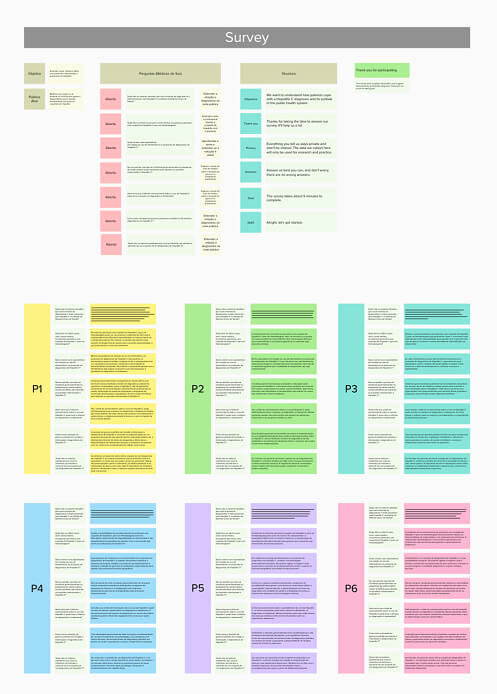
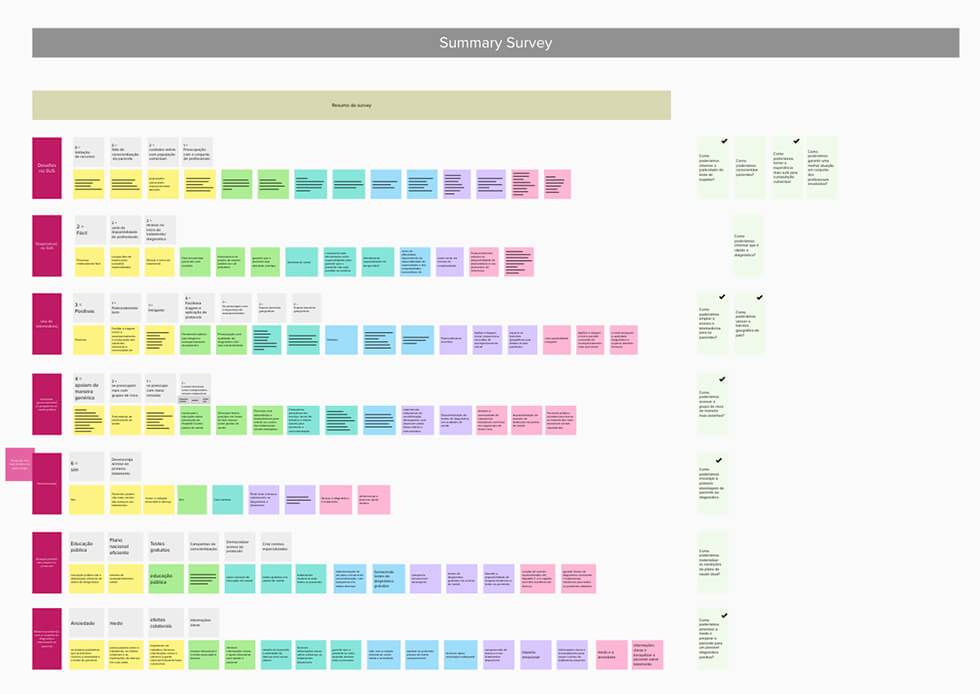
143 stickies, Mural board
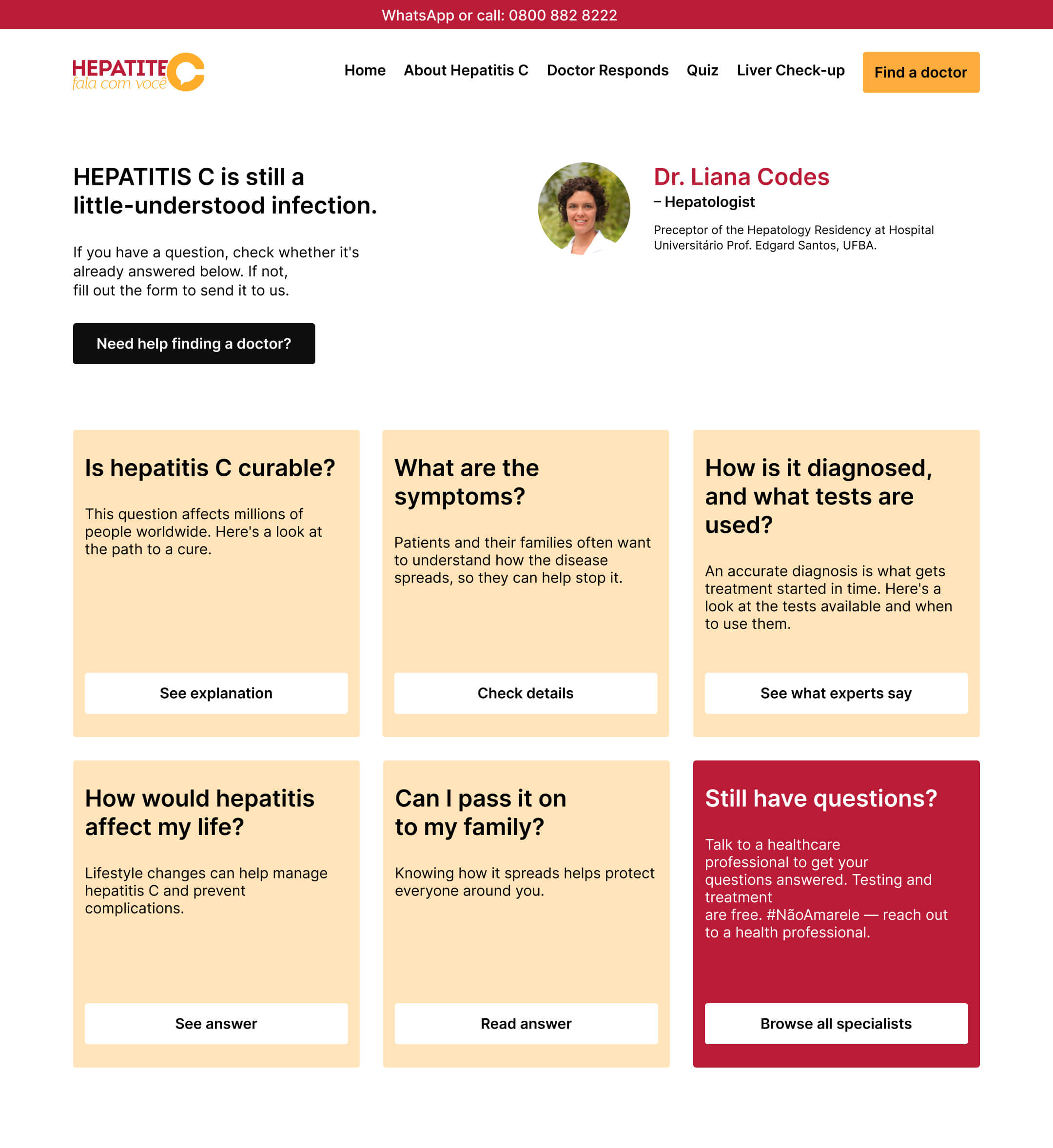
Saving your time
Gilead treats Hepatitis C in Brazil, where the public health system already covers the rapid test and the antiviral treatment for free. The problem isn't the medicine: most people in the at-risk group don't know they're at risk, and the ones who do freeze in front of a test out of fear, stigma, or bad information.
Instead of segmenting by demographics, I organized the research and the product around the emotional state a person is in at each stage, five states running from denial before testing to the anxiety of a caregiver who doesn't know how to help.
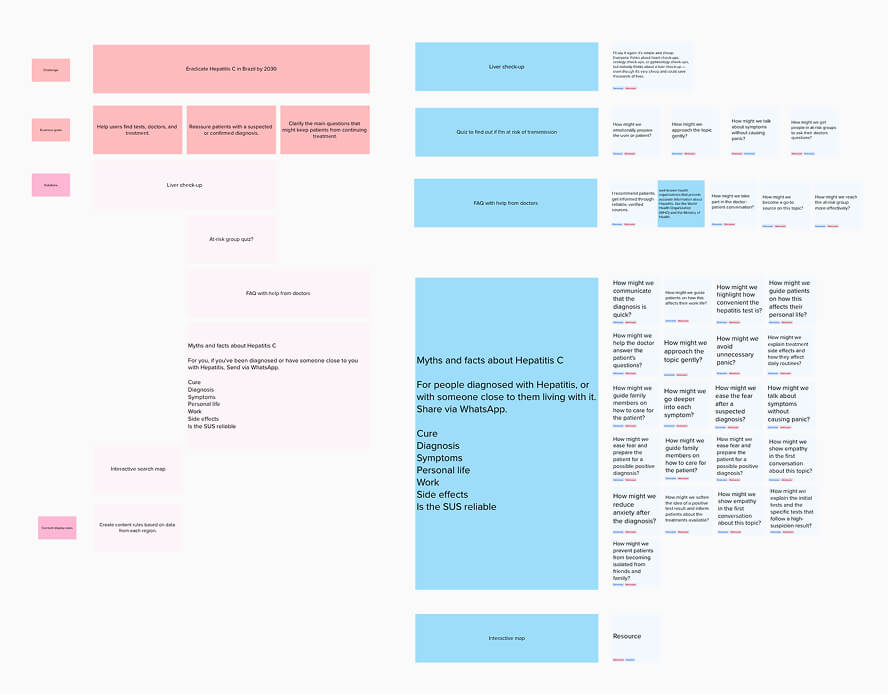
I traced every idea back to its research origin and grouped five resulting solutions under three business goals: finding tests and treatment, reassurance through diagnosis, and clearing the questions that stall treatment. Each one came with a Day-1 behavioral signal, so the team could read what was working before any clinical outcome was even possible to measure.
Challenge
Eradicate Hepatitis C in Brazil by 2030
Business goals
Help users find tests, doctors, and treatment.
Reassure patients with a suspected or confirmed diagnosis.
Clarify the main questions that might keep patients from continuing treatment.
Solutions
Liver check-up
Interactive map
At-risk group quiz
FAQ with help from doctors
Myths and facts about Hepatitis C
The biggest challenge
The barrier wasn't the disease. It was fear.
Hepatitis C is curable, and the test and treatment are free through the public system. But the disease is silent, and the obstacle sits where the clinic can't reach it: people who don't know they're at risk, and people who do but freeze anyway, out of fear, stigma, or bad information.
One line from an interview stuck with me: everyone thinks to check their heart or their eyes, but nobody thinks to check their liver, even though that test is cheap and can save lives. Making that check-up feel as ordinary as any other became the real design problem.
The outcome
9 territories, 5 solutions
no idea came from a hunch. Each one traces back to something a real person said.
3 business goals
each solution answers a real need, whether that's finding care, feeling reassured, or getting unstuck.
What I did
Learnings
Content is a product, not decoration.
Every piece exists to move one specific feeling toward one specific action, and every action needed its own measurable signal from day one. That discipline shaped the whole system, not just the launch plan.
Read the seam the data already drew.
The affinity map surfaced nine territories on its own. I didn't invent a taxonomy, I followed the one 143 stickies already pointed to, then held every idea accountable to where it came from.
A North Star only works with a baseline.
Before launch, every Day-1 event needs a baseline recorded first, or "day one results" has nothing to compare against. I built that requirement into the measurement plan from the start.